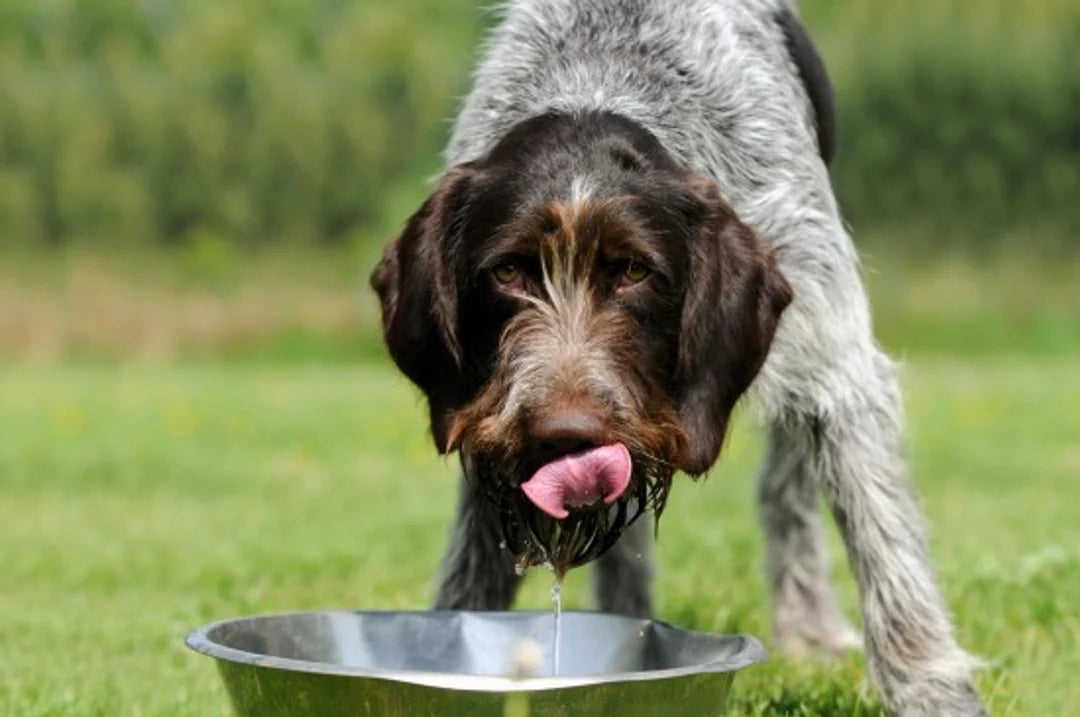
Hydration is an everyday need
Water supports normal temperature regulation, circulation and digestion. Dogs lose water through breathing, urine and faeces, and their needs can rise with exercise, warm weather, dry diets, travel and certain health conditions.
The most useful approach is simple: provide reliable access to fresh water and plan activity around the individual dog's needs. Do not wait for extreme heat before thinking about hydration.
Start before the walk
Make sure water is available at home before leaving and carry enough for the route, especially where natural water sources are absent or unsafe. Collapsible bowls make it easier to offer controlled drinks during breaks.
Avoid encouraging a dog to gulp a very large volume immediately after intense activity. Instead, end strenuous work gradually, allow the dog to settle and offer reasonable opportunities to drink. Dogs with medical conditions may need specific advice from their vet.
Adjust the activity, not just the water
Water cannot make unsafe exercise conditions safe. On warm or humid days, choose cooler times, reduce intensity, include shade and shorten the route. Pavements, enclosed vehicles and poorly ventilated spaces can become dangerous quickly.
Brachycephalic dogs, older dogs, puppies, overweight dogs and dogs with heart or respiratory problems may struggle sooner. Fitness does not remove the risk of overheating, so watch the dog rather than relying only on temperature or distance.
Travel and unfamiliar places
Changes in routine can reduce drinking. Take familiar water and a familiar bowl when practical, schedule breaks and check that accommodation offers constant access. Some dogs prefer water placed away from busy feeding or foot-traffic areas.
Do not assume every stream, puddle or lake is suitable. Stagnant water, blue-green algae, salt water and contamination can present serious risks. Carrying water gives you more control.
Recognise concerning changes
Seek veterinary advice if a dog refuses water, cannot keep water down, drinks or urinates markedly more than usual, becomes weak, collapses, has very dry or sticky gums or shows signs of overheating. Heatstroke is an emergency and requires immediate veterinary help.
Hydration products and complementary feeds are not substitutes for water or emergency treatment. Use any product only as directed and check suitability when a dog has a diagnosed condition or receives medication.
Important information: This article provides general wellbeing information and does not replace veterinary advice. CWR+ products are complementary feeds or complementary pet foods, as identified on their labels, and are not intended to diagnose, treat, cure or prevent disease. Always follow the current product label.