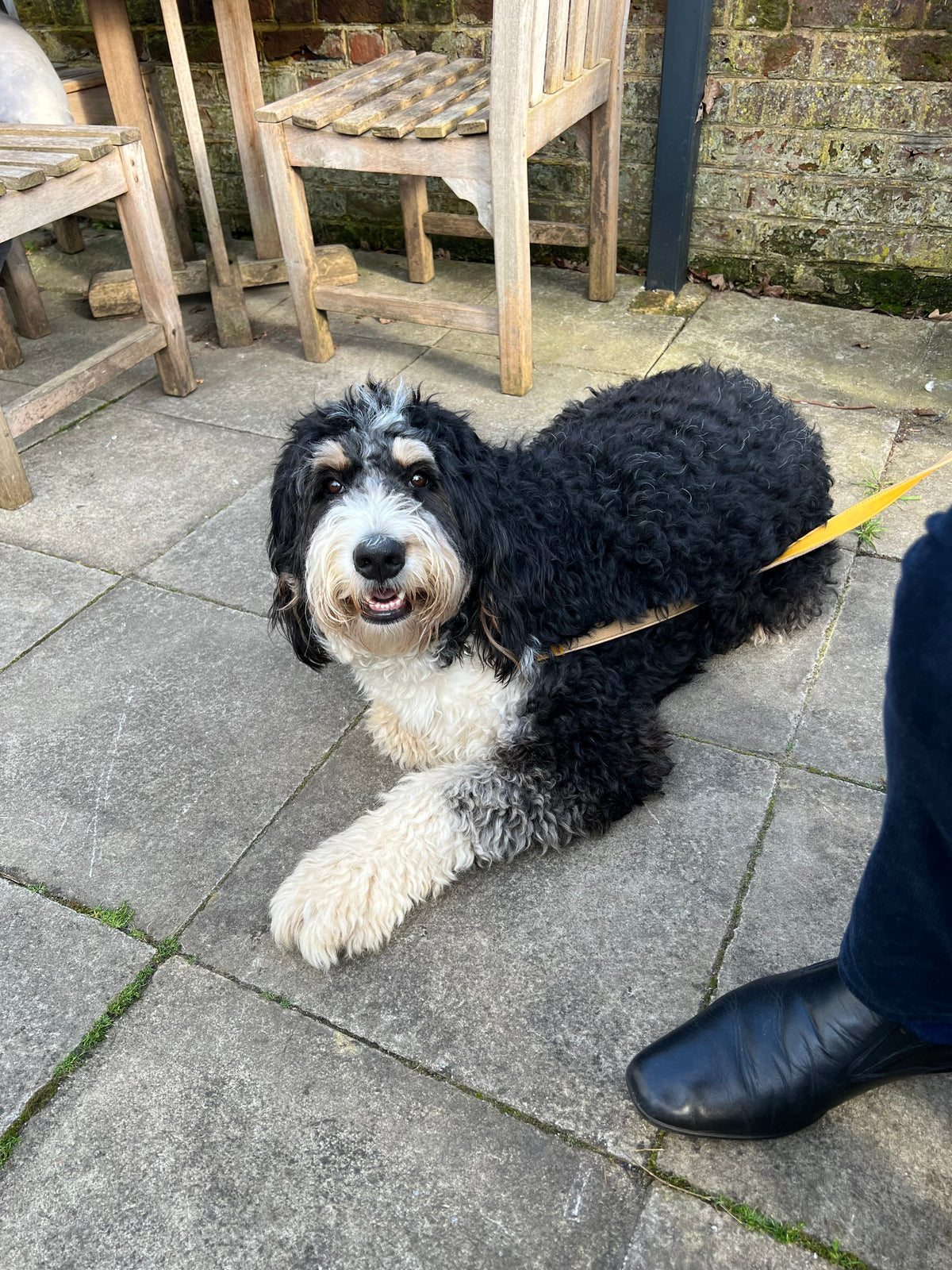
Small changes to exercise, the home environment, feeding and daily routines can make later life easier to navigate.
Ageing is individual
There is no single age at which every dog becomes senior. Size, breed, health history and lifestyle all influence the pace of ageing. The most useful comparison is often with the same dog several months earlier rather than with another dog of the same age.
Gradual changes can be easy to dismiss as normal ageing. Reduced enthusiasm, altered sleep, house-soiling, stiffness, weight change, confusion or withdrawal may justify a veterinary conversation rather than simply being accepted.
Keep moving within comfortable limits
Regular, manageable movement can help maintain muscle condition, confidence and interest in the environment. Many senior dogs do better with shorter, more frequent walks than occasional long outings. Allow time to sniff and explore rather than measuring every walk by distance.
Avoid sudden demands the dog is not prepared for. Adjust routes for weather, terrain and the dog's response that day. If stiffness or fatigue increases after activity, discuss the pattern with your vet and review the routine.
Make the home easier
Non-slip flooring, supportive bedding, good lighting and easy access to favourite resting places can make a substantial practical difference. Ramps or stable steps may reduce repeated jumping, although dogs should be introduced to them slowly and safely.
Keep food, water and toileting access predictable. Dogs with reduced hearing or vision may startle more easily, so approach gently and avoid moving key furniture without good reason.
Review nutrition and body condition
Energy needs can change with age and activity, while maintaining muscle becomes increasingly important. Regular bodyweight and body-condition checks help identify gradual gains or losses. Speak to a veterinary professional before making major dietary changes, particularly when a dog has a diagnosed condition.
Complementary feeds may add targeted nutrients, but they should fit the whole diet. Check for overlapping vitamins, minerals, fatty acids or botanicals when using more than one product and follow the label quantities.
Keep the mind involved
Senior dogs can still enjoy learning and choice. Gentle scent games, food puzzles suited to the dog's ability, familiar social contact and short training sessions can add interest without requiring intense physical activity.
Routine is reassuring, but it need not mean inactivity. Offer manageable opportunities, let the dog set the pace and notice which activities still bring relaxed engagement.
Use preventive care
Regular veterinary checks become increasingly valuable as dogs age. Dental disease, pain, sensory change and internal illness may develop gradually. Early discussion gives the veterinary team a better chance to investigate changes and suggest appropriate support.
Seek prompt advice for sudden weakness, collapse, breathing difficulty, severe pain, inability to rise or any rapid change in behaviour or physical condition.
Important information: This article provides general wellbeing information and does not replace veterinary advice. CWR+ products are complementary feeds or complementary pet foods, as identified on their labels, and are not intended to diagnose, treat, cure or prevent disease. Always follow the current product label.