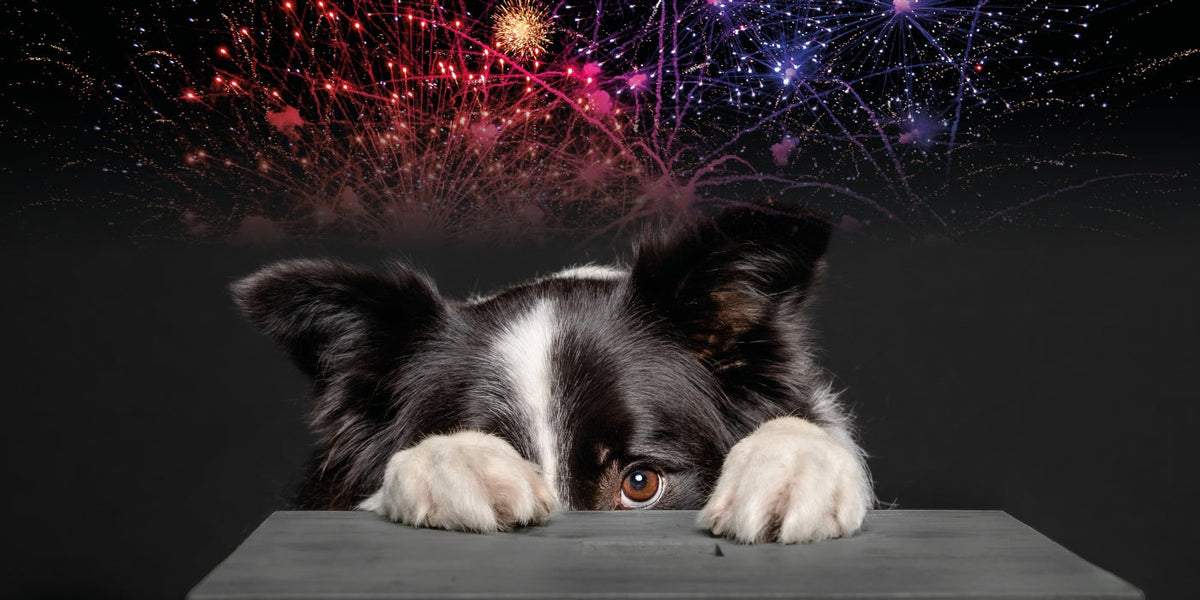
For many of us, Bonfire Night and New Year’s Eve mean celebration. For our dogs, the experience can be very different.
Unexpected bangs, whistles, flashes and vibrations can turn an otherwise normal evening into a stressful one. Dogs Trust lists behaviours including trembling, panting, pacing, hiding, barking, loss of appetite and attempts to escape among the signs that a dog may be struggling with fireworks. Dogs Trust
The good news is that there is plenty we can do to prepare. And preparation matters: rather than waiting for the first firework to go off, start thinking about your dog’s routine and environment before firework season begins.
Why can fireworks be so difficult for dogs?
Dogs experience the world differently from us, particularly when it comes to sound. Sudden, unpredictable noises combined with flashes of light can be frightening because your dog has no way of understanding where they are coming from or when the next one will happen.
The problem is no longer confined to 5 November either. Fireworks can appear around Halloween, Diwali, Bonfire Night and throughout the Christmas and New Year period. NextGen
That means it makes sense to think of this as firework season, rather than simply one difficult evening.
1. Prepare before the first bang
One of the most useful things you can do is create a safe, comfortable place where your dog can retreat.
Choose somewhere they already enjoy spending time and make it cosy with their bed, blankets and familiar items. Introduce it while everything is calm rather than suddenly creating it on Bonfire Night.
The aim is not to shut your dog away, but to give them a place they associate with security. Dogs Trust recommends preparing a snug safe space ahead of fireworks and allowing your dog to decide whether they want to use it. Dogs Trust
2. Get the walk done before dark
On Bonfire Night and New Year’s Eve, consider moving your normal evening walk forward.
Exercise during daylight and aim to have your dog safely back home before fireworks are likely to begin. The RSPCA similarly recommends daylight walks to reduce the risk of dogs encountering unexpected fireworks outside. RSPCA
Never force a frightened dog outside once fireworks have started.
3. Shut out the flashes and reduce the bangs
As darkness falls, close windows and curtains or blinds. This can reduce both outside noise and the sudden flashes of light.
Background sound can help too. Television, radio or calming music provides a more consistent soundscape and may help mask some of the noise outside. RSPCA
Try to keep the rest of the evening as normal as possible.
4. Make sure your home and garden are secure
A frightened dog may behave completely differently from normal.
Check doors, gates, windows and fences before fireworks begin, and make sure everyone in the household understands the importance of keeping them secure. Dogs Trust also recommends checking that microchip details are up to date in case a frightened dog does escape. Dogs Trust
This is particularly important around New Year, when doors may be opening more frequently for guests.
5. Let your dog decide what they need
Some dogs want reassurance. Others want to hide. Some may pace, while others prefer to curl up somewhere quiet.
Allow them to choose.
If your dog seeks you out, calmly reassure them. If they retreat to their safe place, don't repeatedly coax them back out. And never punish barking, hiding, pacing or other fear-related behaviour. RSPCA
Your job is to make the environment feel as predictable and secure as possible.
6. Think about calm as part of everyday wellbeing
Alongside changes to your dog's environment and routine, nutritional maintenance can form part of a broader approach to everyday wellbeing.
CWR+ Calming Maintenance Chews have been developed for dogs that can find it harder to switch off during challenging periods such as changes in routine, travelling, unfamiliar environments, busy households, fireworks and loud noises.
The formulation includes L-Theanine and Chamomile and is designed to help maintain calm and relaxed behaviour in a convenient daily chew. Importantly, this isn't about sedating your dog or changing their personality. It is about providing nutritional help as part of an overall routine designed to support a more settled state.
Discover CWR+ Calming Maintenance Chews
7. Don't wait until New Year's Eve
If you know your dog struggles with fireworks, planning ahead is preferable to trying to solve everything once the noise has started.
Establish the safe space early. Adjust walks. Decide where your dog will spend the evening. Have familiar enrichment available. Make sure the house is secure and introduce any everyday nutritional routine in advance rather than treating it as an emergency response.
For dogs with significant noise fear or anxiety, speak to your vet. They can assess whether there may be other contributing factors and discuss appropriate treatment or referral to a qualified behaviourist. Dogs Trust
From Bonfire Night to New Year — preparation makes the difference
We can't explain fireworks to our dogs. But we can make their environment safer, calmer and more predictable.
A little preparation before Bonfire Night — and again as Christmas and New Year approach — can make a considerable difference: earlier walks, a secure home, somewhere safe to retreat, reduced noise and flashes, a familiar routine and appropriate everyday nutritional support.
Because celebrations should be enjoyable for us without becoming frightening for them.
CWR+ Calming Maintenance Chews
For calmer days, more settled moments and everyday maintenance.
SUPPORT EVERY STEP AT EVERY STAGE.