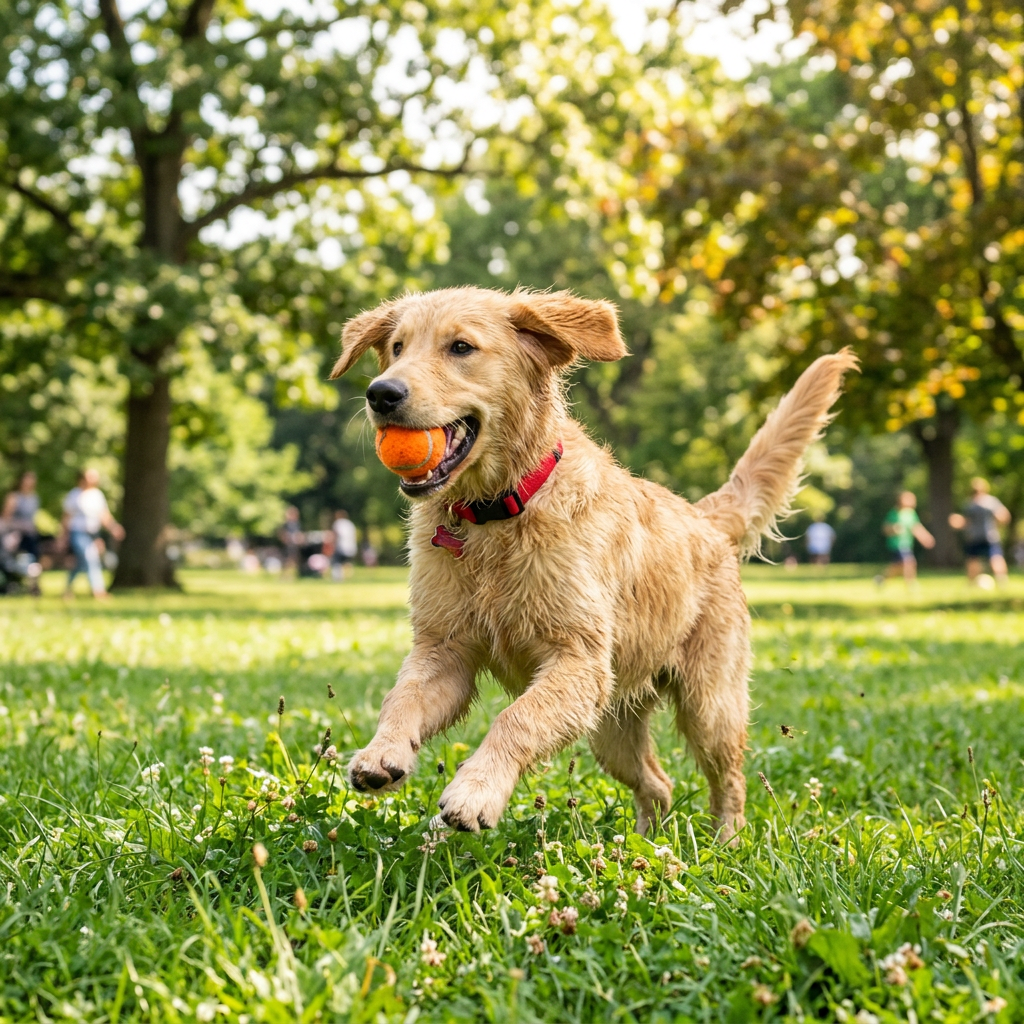
Why everyday movement matters
Dogs use their joints continuously, from climbing into the car to turning quickly during play. Mobility is not only about formal exercise. It shapes a dog's ability to explore, rest comfortably and take part in normal family life.
There is no single routine that suits every dog. Age, breed, body shape, fitness, previous injuries and health conditions all affect what is appropriate. The useful goal is steady, comfortable movement that matches the individual dog rather than chasing a fixed distance or activity target.
Build consistency before intensity
Regular activity is usually easier on the body than occasional bursts of demanding exercise. Daily walks, gentle play and controlled changes of pace can help maintain muscle condition and coordination. Sudden increases in distance, repeated high-impact jumping or hard exercise after a long period of rest can place unnecessary demands on an unprepared dog.
Increase activity gradually and watch how the dog moves both during exercise and later that day. A dog may appear enthusiastic outdoors but show stiffness after resting, hesitate on stairs or take longer to settle afterwards. Those details are worth noticing.
Keep bodyweight in view
Bodyweight has a direct practical effect on movement because every step carries the dog's mass. Regularly check body condition rather than relying only on the number on the scales. From above, a healthy waist should normally be visible, while the ribs should be easy to feel beneath a light covering of tissue.
If you are unsure what is appropriate for your dog, ask your veterinary practice to demonstrate body-condition scoring. Small, sustainable adjustments to meal quantities and treats can be easier to maintain than abrupt changes.
Make the home easier to navigate
Simple environmental changes can reduce avoidable slips and awkward movements. Consider non-slip runners on smooth floors, secure steps or ramps for frequently used vehicles, supportive bedding and keeping nails at an appropriate length. Place food and water where the dog can reach them comfortably.
Warm-up does not need to be complicated. Beginning a walk at an easy pace gives the dog time to settle into movement before faster work or play.
Where nutrition fits
A complete, balanced diet remains the foundation. Complementary feeds may add selected nutrients to a dog's normal routine, but they do not replace appropriate feeding, conditioning or veterinary care. Check the full composition when combining products so that vitamins, minerals and other ingredients are not duplicated unnecessarily.
Follow the product label and allow time for a consistent routine. More is not automatically better, and the recommended daily quantity should not be exceeded unless a suitably qualified professional advises otherwise.
When to seek veterinary advice
Arrange veterinary advice if your dog develops persistent stiffness, limping, swelling, pain, reluctance to move, a sudden change in gait or difficulty rising. An acute injury, inability to bear weight or obvious distress requires prompt attention. Early assessment matters because changes that look similar can have very different causes.
Important information: This article provides general wellbeing information and does not replace veterinary advice. CWR+ products are complementary feeds or complementary pet foods, as identified on their labels, and are not intended to diagnose, treat, cure or prevent disease. Always follow the current product label.