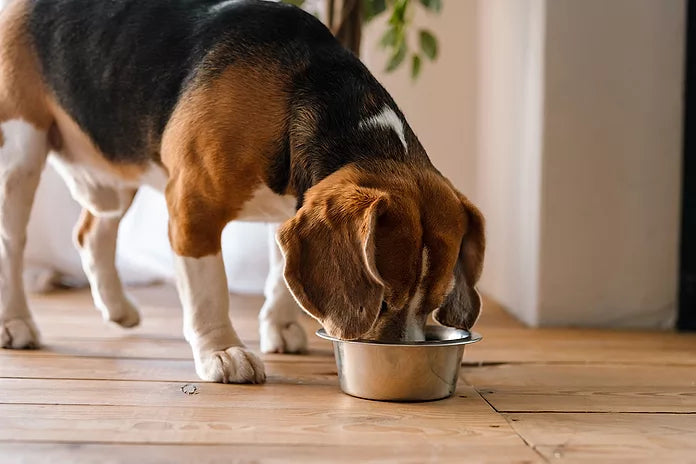
How consistent feeding, appropriate fibre, gradual changes and close observation can help maintain a settled routine.
Begin with the whole diet
Digestive wellbeing is influenced by the complete feeding routine: what the dog eats, how much, how quickly and how consistently. A complete food appropriate for the dog's life stage should provide the nutritional foundation, while treats and complementary feeds should be considered as part of the total intake.
Measure portions rather than estimating them, particularly when several family members feed the dog. Sudden increases in treats, table scraps or rich foods can change stool quality even when the main diet remains the same.
Change food gradually
When moving from one diet to another, a gradual transition gives the digestive system time to adapt. The exact schedule may vary by dog and product, but mixing increasing amounts of the new food across several days is often more manageable than an abrupt switch.
Introduce one significant change at a time where possible. If food, treats and supplements all change together, it becomes difficult to identify what has influenced the dog.
The role of fibre
Dietary fibre is not one single substance. Different fibre sources have different properties and can influence stool consistency, transit and the intestinal environment in different ways. That is why more fibre is not always the answer to a digestive concern.
Complementary digestive products should be used according to their label and alongside an appropriate diet. Ensure fresh water remains available, because hydration and fibre intake are closely connected in practical feeding.
Observe what is normal for your dog
Normal frequency and stool appearance vary, but a consistent baseline helps you recognise change. Note appetite, energy, stool frequency, consistency, straining, vomiting and any recent dietary changes. A short written record can be helpful if veterinary advice becomes necessary.
Slow-feeding bowls, calm mealtimes and separating dogs during feeding may help dogs that bolt their food or feel pressured around meals. Avoid strenuous activity immediately around large meals, particularly in dogs considered at increased risk of gastric dilatation-volvulus; ask your vet for breed-specific advice.
Know when not to wait
Contact a veterinary practice if digestive signs are persistent, recurrent or accompanied by lethargy, pain, repeated vomiting, blood, marked appetite loss, dehydration, abdominal swelling or difficulty passing stool. Puppies, older dogs and dogs with existing conditions may deteriorate more quickly.
A supplement cannot diagnose the cause of digestive signs. If the dog is unwell, assessment comes before experimentation with multiple products.
Important information: This article provides general wellbeing information and does not replace veterinary advice. CWR+ products are complementary feeds or complementary pet foods, as identified on their labels, and are not intended to diagnose, treat, cure or prevent disease. Always follow the current product label.